Understanding CCW Laws in California (What You Should Know)
By H2K Defense
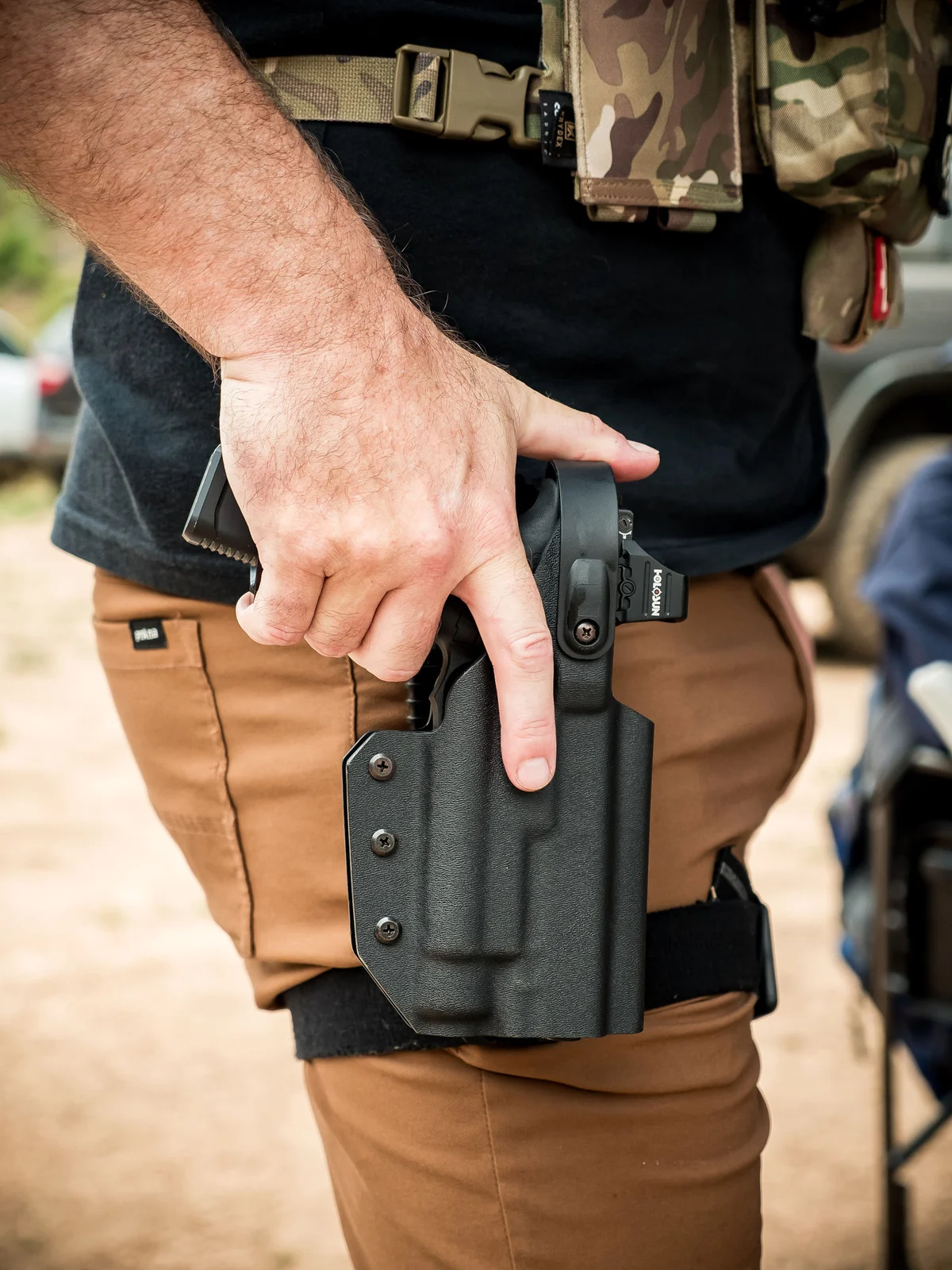
Picture this: You’re walking back to your car after dinner with your family. It’s late, the parking lot is mostly empty, and you notice someone watching your every move. You instinctively become more alert. As a responsible gun owner, you’ve trained for situations like this, and you legally carry a concealed firearm for personal protection.
But here’s an important question: Do you know exactly what California law allows you to do at that moment?
Owning a firearm and carrying one concealed are two very different legal responsibilities. While many Californians focus on improving their marksmanship or learning defensive shooting techniques, understanding the state’s concealed carry laws is just as important. A split-second decision made without knowing the law could have consequences long after the immediate danger has passed.
California’s firearm laws are among the most detailed in the country, and they continue to evolve. Whether you’ve recently received your Concealed Carry Weapon (CCW) permit or you’re considering applying for one, understanding where you can carry, when you’re legally justified in using force, and what to do after a defensive incident is essential.
In this article, we’ll break down the fundamentals of California CCW laws in practical terms, helping you become not only a more capable firearm owner but also a more informed and responsible one.
What Is a California CCW Permit?
A California Concealed Carry Weapon (CCW) permit allows qualified individuals to legally carry a concealed handgun in public. Unlike open carry, which is generally prohibited in California, a valid CCW permit provides an exception that allows you to carry a concealed firearm for lawful self-defense.
Although California has become more accessible to applicants in recent years, obtaining a permit is still more involved than simply submitting paperwork.
Meeting the Basic Requirements
California CCW applicants generally must:
- Be at least 21 years old.
- Be a qualified California resident or otherwise eligible to apply through the appropriate issuing authority.
- Be legally eligible to own and possess a firearm under state and federal law.
- Complete a state-approved 16-hour CCW training course that includes live-fire qualification.
- Pass a detailed background check and Live Scan fingerprinting.
- Pay all required application, training, and permit fees.
- Renew the permit every two years and complete any required renewal training.
Meeting these requirements allows you to apply for and maintain a California CCW permit.
But checking the boxes doesn’t automatically make someone prepared to carry a firearm every day.
A permit gives you legal permission.
Training, judgment, and a clear understanding of the law are what help you carry responsibly.
Receiving your permit isn’t the finish line.
It’s the beginning of a much greater responsibility.
Where Can You Carry a Concealed Firearm in California?
One of the biggest misconceptions among new permit holders is believing that a CCW allows them to carry everywhere. In reality, California law places restrictions on numerous locations, and knowing these limitations is critical.
Schools and Educational Campuses
Firearms are generally prohibited on K–12 school grounds and many college campuses unless a specific legal exception applies.
If you’re dropping off your child or attending a school event, your permit alone may not authorize you to carry there.
Government Buildings
Many government facilities restrict firearms, including courthouses and secure public buildings.
Even if your firearm remains concealed, entering these locations while armed could result in serious legal consequences.
Sensitive Locations
California law also identifies various “sensitive places” where carrying firearms may be prohibited or restricted. Depending on current legal developments and local regulations, these may include:
- Certain public buildings
- Some healthcare facilities
- Public transportation in specific circumstances
- Secure airport areas
- Other locations designated by law
Because these laws continue to change through legislation and court decisions, responsible gun owners should regularly verify current restrictions before carrying.
Private Property
Private businesses and property owners may establish their own firearm policies.
Respecting posted signs and understanding whether a location permits lawful concealed carry helps prevent unnecessary legal issues before they arise.
Knowing When Self-Defense Is Legally Justified
Carrying a firearm doesn’t give someone the authority to use force whenever they feel uncomfortable.
California self-defense law centers on one critical principle:
You must reasonably believe that you or another innocent person faces an imminent threat of death or great bodily injury.
That standard is higher than simply feeling afraid or suspicious.
Imminent Threat Matters
Imagine someone angrily arguing with you in a parking lot.
- They’re yelling.
- They’re pointing.
- They’re insulting you.
None of those actions automatically justify drawing a firearm.
Now imagine that same individual aggressively closes the distance, ignores repeated commands to stop, and reaches toward what appears to be a concealed weapon.
The circumstances have changed dramatically.
Every self-defense situation depends on the totality of what a reasonable person would perceive at that moment, not simply on one isolated action.
Your Goal Is to Stop the Threat
One of the most important concepts taught in quality defensive firearms training is that your objective is never punishment.
It’s protection.
If deadly force becomes legally justified, it’s because there are no reasonable alternatives left to stop an immediate threat.
Once the threat ends, the justification for using force ends as well.
De-Escalation Is Always the Better Option
Many people assume concealed carry is about winning confrontations.
Responsible carriers know it’s about avoiding them whenever possible.
A firearm should never become a substitute for patience, awareness, or good judgment.
Avoid What You Can Avoid
Simple habits dramatically reduce the likelihood of needing to defend yourself:
- Leave arguments before they escalate.
- Stay aware of your surroundings.
- Keep your distance from suspicious situations.
- Trust your instincts and leave early if something feels wrong.
The safest defensive encounter is often the one that never happens.
Your Firearm Is the Last Resort
Drawing a firearm changes every aspect of an encounter.
It affects your safety.
It affects the safety of everyone around you.
And it begins a legal investigation that may continue long after the incident itself.
That’s why quality training places so much emphasis on conflict avoidance, verbal commands, and sound decision-making before ever discussing marksmanship.
What Should You Do After a Defensive Shooting?
Even if you’ve acted lawfully, the moments immediately following a self-defense incident can significantly impact what happens next.
Many responsible gun owners spend years practicing how to shoot but very little time learning what comes after.
Call 911 Immediately
If you’re involved in a defensive shooting, notify emergency services as soon as it is safe to do so.
Report that you were attacked, request police and medical assistance, and provide your location.
Remain calm and avoid speculating about details over the phone.
When officers arrive, follow every instruction carefully.
Remember that responding officers don’t yet know who the victim is or what occurred.
Your priority is everyone’s safety including your own.
Call USCCA
After calling 911, and once you’re in a safe position, your next call should be to the USCCA Critical Response Team if you’re a member.
This matters because a self-defense incident doesn’t end when the immediate threat stops. In many cases, that’s when the legal process begins.
- You may be questioned.
- Your firearm may be taken as evidence.
- You may be detained or arrested while officers investigate what happened.
Even if you believe you did everything right, you don’t want to face that process alone or try to figure out your next move while your adrenaline is still high.
USCCA members have access to a 24/7 Critical Response Team that can help connect them with an attorney and provide support following a covered self-defense incident.
The time to think about legal support isn’t after something happens.
It’s before you ever need it.
Having the right phone number saved and knowing who to call can help you avoid making an already difficult situation even worse.
Be Careful About Detailed Statements
Adrenaline affects memory, perception, and communication.
Many experienced self-defense attorneys recommend providing only the essential information needed to establish yourself as the victim before consulting legal counsel regarding a detailed statement.
Even completely innocent people can unintentionally make inaccurate statements while under extreme stress.
Understanding this process before you ever need it can protect both your legal rights and the integrity of the investigation.
Why Ongoing Training Matters More Than Your Permit
Earning your California CCW permit is an important milestone, but it’s only the beginning of your journey as a responsible armed citizen. A permit gives you the legal ability to carry a concealed firearm—it doesn’t automatically prepare you for the complex decisions that come with carrying one every day.
Real-life self-defense situations happen quickly, often without warning. They rarely resemble the neat, predictable scenarios people imagine at the shooting range. That’s why ongoing training is essential.
Defensive Skills Go Beyond Marksmanship
Being proficient with your firearm is important, but defensive preparedness involves much more than hitting a target.
Quality training teaches you how to:
Read Potential Threats
Recognizing suspicious behavior early can give you valuable time to avoid danger altogether.
Situational awareness often prevents problems before they become life-threatening.
Make Sound Decisions Under Stress
- Stress affects everyone.
- Heart rate increases.
- Vision narrows.
- Fine motor skills deteriorate.
Without regular training, even simple decisions become much harder under pressure.
Scenario-based exercises help prepare your mind to think clearly when every second counts.
Understand the Legal Aftermath
Many defensive encounters end long before the legal process does.
Knowing what to say, who to call, and how investigations typically unfold is just as important as understanding when force may be legally justified.
Prepared gun owners train for both the encounter and everything that follows.
A Real USCCA Member Story: Jeremy McCree’s Legal Battle After Acting in Self-Defense
Understanding California’s CCW laws isn’t just about avoiding mistakes before a defensive encounter, it’s also about understanding what can happen afterward.
Jeremy McCree’s experience is a powerful reminder that even when someone reasonably believes they acted in self-defense, the legal process can be long, stressful, and expensive.
One rainy afternoon in Los Angeles, Jeremy noticed several individuals behaving suspiciously near his apartment complex. Later that day, after returning from the store, those same individuals confronted him outside his home.
As Jeremy walked toward the entrance of his apartment building, the group followed him. One individual continued advancing despite repeated verbal commands to stop. Jeremy noticed the man repeatedly reaching toward his waistband, leading him to believe he was facing an imminent deadly threat. Fearing for his life, Jeremy drew his firearm. Even after seeing the gun, the man continued advancing. Jeremy fired a single shot to stop the threat before immediately retreating to safety and calling 911.
From a defensive training perspective, Jeremy did many things experts recommend. He attempted to avoid the confrontation, gave verbal commands, used only the amount of force he believed was necessary to stop the immediate threat, sought safety, and contacted emergency services.
Unfortunately, that wasn’t the end of his ordeal.
Responding officers initially knew only that someone had been shot. Jeremy was arrested, booked on serious felony charges, and informed that his bail had been set at $2 million. He later described believing his life was over despite acting to save it.
The legal battle stretched on for nearly two years.
During that time, his legal team reconstructed the incident, hired investigators and use-of-force experts, analyzed surveillance footage, and challenged conflicting witness statements. Prosecutors ultimately acknowledged there was a legitimate self-defense argument and dismissed the primary felony allegations. Jeremy eventually entered a no-contest plea to a misdemeanor carrying offense that stemmed from California’s permitting laws as they existed before the Bruen decision, receiving community service and a firearm safety class instead of prison.
His case demonstrates an important lesson for every California gun owner:
Even when your actions may be legally justified, you should expect your decisions to be thoroughly investigated.
Understanding California’s laws, exercising good judgment before using force, and knowing what to do afterward are all part of responsible concealed carry.
If you’d like to hear Jeremy tell his story in his own words and learn more about the legal challenges he faced, you can watch the full USCCA member story here ↗
Carrying Responsibly Means Staying Educated
California firearm laws continue to evolve through new legislation and court decisions.
What was true a few years ago may not necessarily apply today.
That’s why responsible concealed carriers make it a habit to stay informed. Reviewing updates from trusted legal and training organizations, attending refresher courses, and regularly practicing both firearm skills and decision-making helps ensure you’re prepared for today’s legal landscape not yesterday’s.
The goal isn’t simply to carry a firearm.
The goal is to carry it responsibly, confidently, and within the law.
Confidence Comes From Preparation, Not Just Carrying a Firearm
Many people believe carrying a concealed firearm automatically makes them safer.
In reality, the firearm is only one part of the equation.
- Your awareness.
- Your judgment.
- Your understanding of California law.
- Your ability to recognize danger early.
- Your commitment to continual training.
Those are the skills that truly prepare you for the unexpected.
A responsible gun owner hopes never to use their firearm. But if that day ever comes, the preparation you’ve invested beforehand may influence not only the outcome of the encounter but also everything that follows.
Preparation isn’t about living in fear.
It’s about having the confidence that comes from knowing you’ve trained, educated yourself, and are ready to make responsible decisions under pressure.
Get Protection with USCCA
Understanding California’s CCW laws is important, but being prepared means thinking beyond the moment of self-defense.
A defensive incident may last only seconds.
The legal process that follows can last much longer.
That’s why responsible gun owners should know who they’ll call and where they’ll turn for support if the unthinkable happens.
A USCCA Membership provides access to self-defense education, training resources, and support following a covered self-defense incident. Members also have access to the 24/7 Critical Response Team, helping them connect with assistance when every decision matters.
At H2K Defense, we believe protection and preparation should go together.
That’s why H2K Defense Memberships include a USCCA Elite Membership. Members can build their skills through H2K training while also gaining access to USCCA education and self-defense protection resources.
And now, you don’t have to live in California to become part of H2K.
Our new H2K Anywhere Membership is available to responsible gun owners across the United States and includes a USCCA Elite Membership.
Whether you train with us in person or join from anywhere in the country, the goal is the same:
- Stay trained.
- Stay informed.
- Stay prepared for what happens before, during, and after a self-defense incident.
A CCW permit gives you permission to carry.
Training builds confidence.
USCCA helps you prepare for what may come next.
Disclaimer:
This content is for general firearm safety and educational purposes only. It is not legal advice, professional instruction, or a substitute for certified training. Firearms are inherently dangerous and improper use may result in injury, death, or property damage. Always seek proper training and ensure compliance with all applicable laws before handling any firearm.